
Custom Label Design for Food Brands
Custom label design helps food brands show personality before anyone opens the package. That matters because shoppers often judge food the same way they judge book covers, cereal mascots, and oddly expensive jars of almond butter: very quickly.
Your label is more than decoration. It tells people what your product is, why it matters, and why it deserves a spot in their cart instead of the 47 other options staring at them from the shelf.
For food brands, the right label can make packaging look polished, clear, and memorable. It can also help your product line feel connected across flavors, sizes, and package styles.
Why Custom Label Design Matters
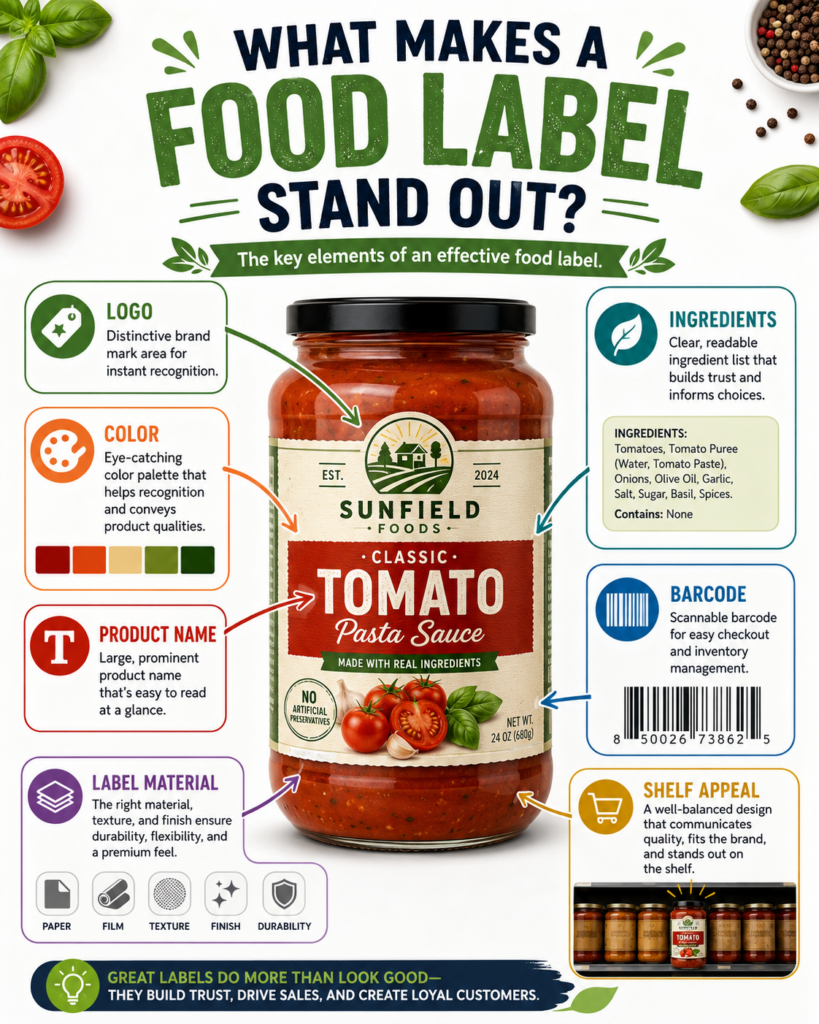
Food packaging has a busy job. It needs to look good, explain the product, fit the package, and still leave room for important details.
That is a lot to ask from one label.
A strong label helps answer three shopper questions fast:
- What is this?
- Why should I care?
- Can I trust it?
A bland label can make even a great product look forgettable. And no one wants their barbecue sauce, protein bites, coffee, or frozen snack to look like it was designed during a lunch break in 2008.
Custom food labels help your product stand out while keeping the message clear.
How Custom Label Design Reflects Brand Identity
Your label should look and feel like your brand.
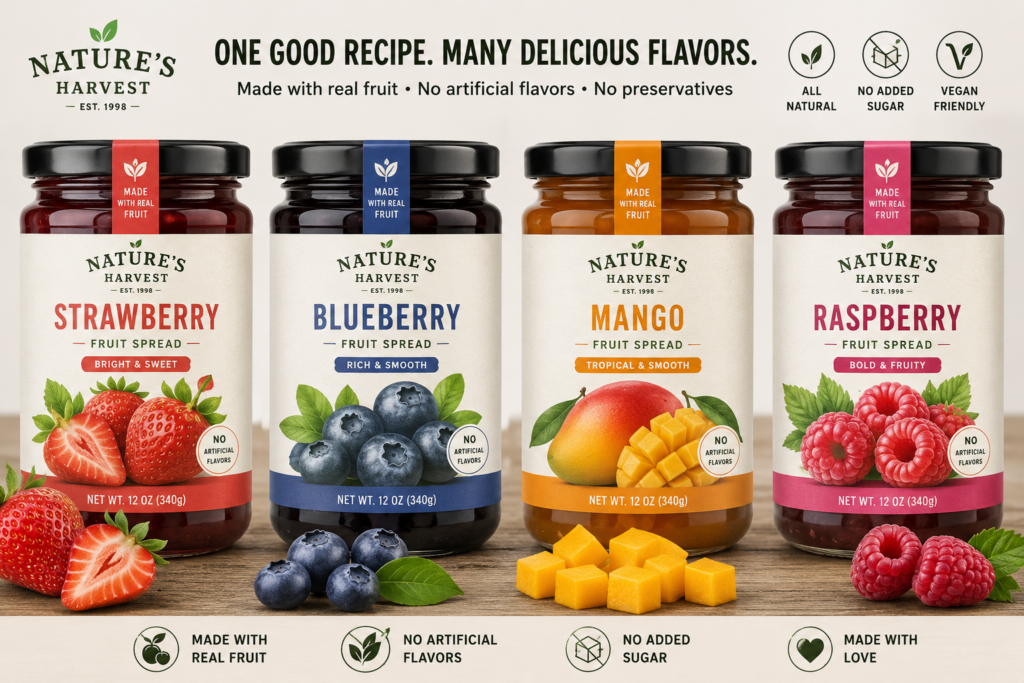
A fun snack brand may use bold colors, playful fonts, and bright flavor callouts. A premium coffee brand may use clean type, soft colors, and a matte finish. A natural food brand may lean into simple layouts, earthy tones, and clear ingredient messaging.
The goal is not to make the loudest label in the aisle. The goal is to make the right label for the right customer.
Good product label design can help show whether your brand is:
- Fun and playful
- Clean and natural
- Premium and refined
- Bold and high-energy
- Simple and practical
In other words, your label should not wear someone else’s outfit. It should dress like your brand.
Key Elements of Strong Custom Food Labels
A good food label needs balance. It should catch attention without turning into a tiny billboard shouting at people.
Here are the key pieces to get right.
Clear Product Name
The product name should be easy to spot. Shoppers should not need detective skills to figure out what they are holding.
Strong Logo Placement
Your logo should be visible, but it does not have to take over the whole package. Think confident handshake, not marching band.
Brand Colors
Colors help shoppers recognize your brand. They can also separate flavors, product types, or special editions.
Easy-to-Read Fonts
Fancy fonts can look nice, but they still need to be readable. If the flavor name looks like an ancient scroll, it may be time to simplify.
Useful Product Information
Food packaging labels often need space for ingredients, nutrition facts, allergen details, barcodes, lot codes, and other product information. These details should be planned into the design early, not squeezed in at the end like a last-minute suitcase.
The Right Finish
Gloss, matte, clear, metallic, or other finish options can change the look and feel of your package. The finish should support the brand, not distract from it.
Custom Label Design for Flexible Packaging
Flexible packaging gives food brands many ways to present products. Labels and printed packaging can be used on stand-up pouches, lay-flat pouches, shrink sleeves, bags, and other package formats.
This is where design and production need to work together.
A label may look perfect on a screen, then feel crowded once it wraps around a pouch. A color may look bold in a design file but softer on certain label materials. A small font may look fine on a monitor but become hard to read on a real package.
That is why custom packaging labels should be designed with the final product in mind.
Flexible Pack can help food brands think through label format, printing method, packaging type, and overall shelf appeal.
Digital Printing vs. Flexographic Printing
Food brands often need different printing options based on order size, artwork needs, and product variety.
Digital printing can be a good fit for short runs, test launches, seasonal packaging, limited editions, or brands with many SKUs. It can help you move faster when designs change often.
Flexographic printing may be a strong fit for larger runs or repeat packaging programs. It is often used when brands need consistent production at higher volumes.
The best option depends on your design, budget, timeline, and packaging goals.
Tips to Make Food Labels Easier to Read
Great label design does not have to be complicated. In fact, simple usually works better.
Use these tips:
- Put the most important message first
- Keep the front panel clean
- Use strong contrast between text and background
- Make flavor names easy to find
- Keep brand style consistent across products
- Avoid crowding the label with too many claims
- Plan space for required product information
- Test how the label looks at actual size
A clear label helps shoppers make a faster decision. And in food packaging, fast decisions matter.
FAQ: Custom Label Design for Food Brands
What is custom label design?
Custom label design is the process of creating a label that matches your brand, product, package type, and customer needs. For food products, it includes layout, colors, logo placement, product name, ingredient areas, and other package details.
Why is custom label design important for food brands?
Custom label design helps food brands stand out, look professional, and create a consistent identity across products. It also makes key product information easier for shoppers to find.
Can custom labels help with shelf appeal?
Yes. Custom labels can improve shelf appeal by using clear messaging, strong colors, readable type, and packaging design that fits the product and brand.
What should I consider before printing food labels?
Before printing, review the package shape, label size, materials, finish, artwork, product information, barcode placement, and any labeling requirements that may apply to your food product.
Is digital printing good for food labels?
Digital printing can be useful for short runs, seasonal designs, product testing, and brands with many flavors or SKUs. It gives food brands more flexibility when artwork changes often.
Conclusion
Custom label design helps food brands turn packaging into a clear, memorable part of their brand identity. The right label can improve shelf appeal, explain the product, and make your packaging feel more connected across every flavor or product line.
Your label should not just sit there looking pretty. It should help sell the product, support the brand, and make shoppers think, “Yes, this belongs in my cart.”
Contact Flexible Pack to discuss custom label design, flexible packaging, shrink sleeves, or printed labels for your food product.